[Project] iMarkers: Imperceptible Fiducial Markers
April 2022 - March 2026
Affiliation: Doctoral Researcher, Interdisciplinary Research Project, University of Luxembourg
Target Audience: Robotics & Augmented Reality (AR) Research Communities
Project Ecosystem: Web-page | Article | GitHub (Standalone) | GitHub (ROS-based) | Paper
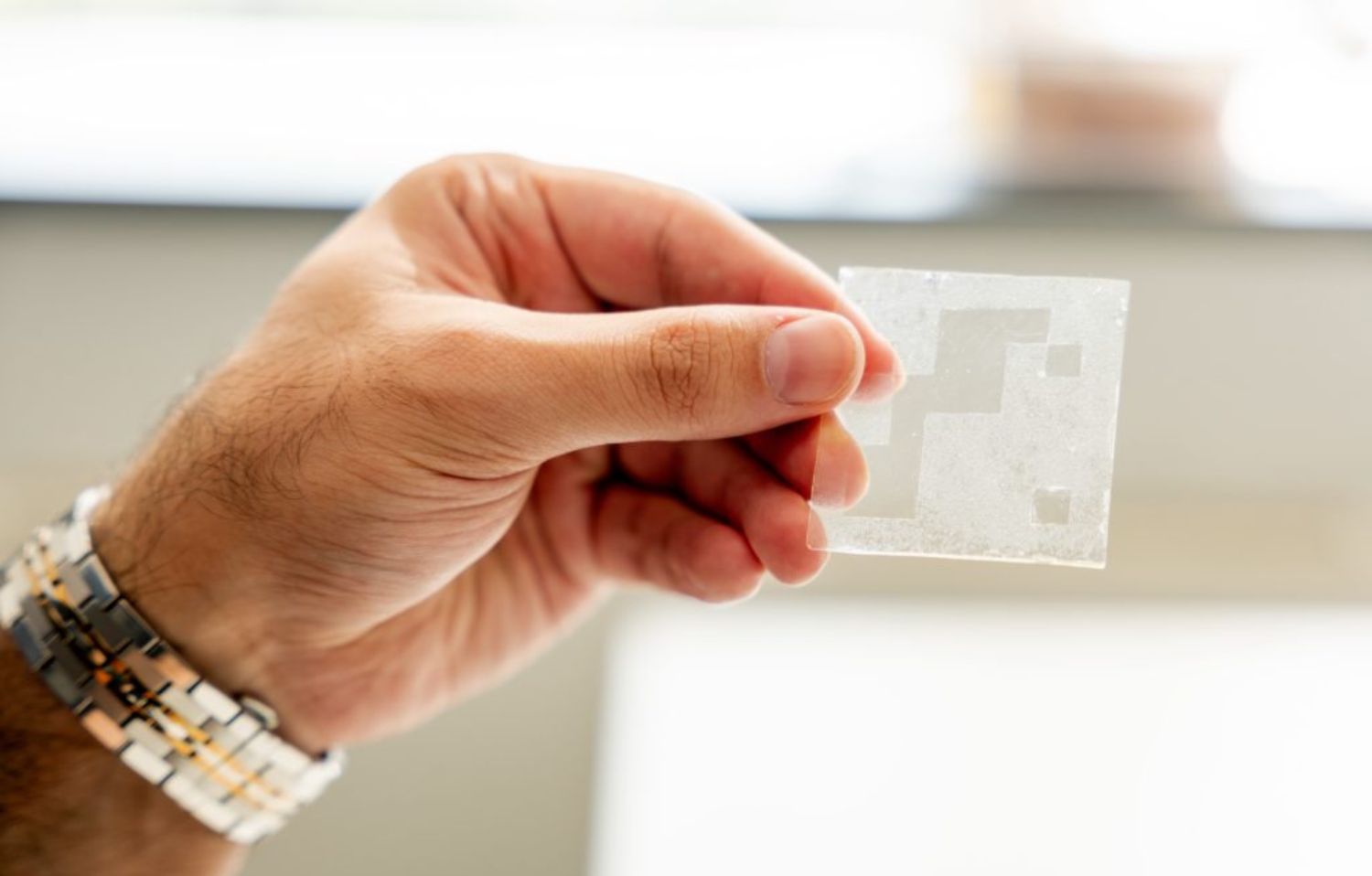
- Unobtrusive Fiducial Markers: next-generation, interdisciplinary tracking system that solves the visual aesthetic limitations of traditional robotics tracking.
- Aesthetic-Preserving Human Obscurity: innovative material engineering that leaves markers invisible or barely noticeable to the naked human eye, allowing seamless deployment in consumer and public environments.
- High-Fidelity Robotic Tracking: optimizes robot navigation, precise object recognition, and deep scene understanding by remaining highly visible to automated systems equipped with specialized sensors.
- Customizable Visibility Spectrum: offers production flexibility to customize the exact optical visibility range and underlying data-encoding algorithms based on specific scenario demands.
- 💡 Stack: Python, C++, OpenCV, ROS
A. Tourani, D.I. Avşar, H. Bavle, J.L. Sanchez-Lopez, J. P.F. Lagerwall, and H. Voos,
"Unveiling the Potential of iMarkers: Invisible Fiducial Markers for Advanced Robotics,"
IEEE Robotics & Automation Magazine (IEEE RAM),
pp. 2-14, 2026.
DOI: 10.1109/MRA.2026.3693135
DOI: 10.1109/MRA.2026.3693135
A. Tourani, H. Bavle, D.I. Avşar, J.L. Sanchez-Lopez, R. Munoz-Salinas, and H. Voos,
"Vision-Based Situational Graphs Exploiting Fiducial Markers for the Integration of Semantic
Entities,"
Robotics, vol. 13, no. 7, 2024.
DOI: 10.3390/robotics13070106
DOI: 10.3390/robotics13070106
H. Agha, Y. Geng, X. Ma, D.I. Avşar, R. Kizhakidathazhath, Y.S. Zhang, A. Tourani,
H. Bavle, J.L. Sanchez-Lopez, H. Voos, M. Schwartz, and J. P.F. Lagerwall,
"Unclonable Human-invisible Machine Vision Markers Leveraging the Omnidirectional Chiral Bragg
Diffraction of Cholesteric Spherical Reflectors,"
Light: Science & Applications (Nature Publications),, vol. 11, no. 309, 2022.
DOI: 10.1038/s41377-022-01002-4
DOI: 10.1038/s41377-022-01002-4